
See the whole farm, not just its emissions.
Complete Farm accounts for carbon across the entire farm system and connects it to production, cost and resilience. This allows the farmer to enact changes that lower carbon and improve the farming operation.
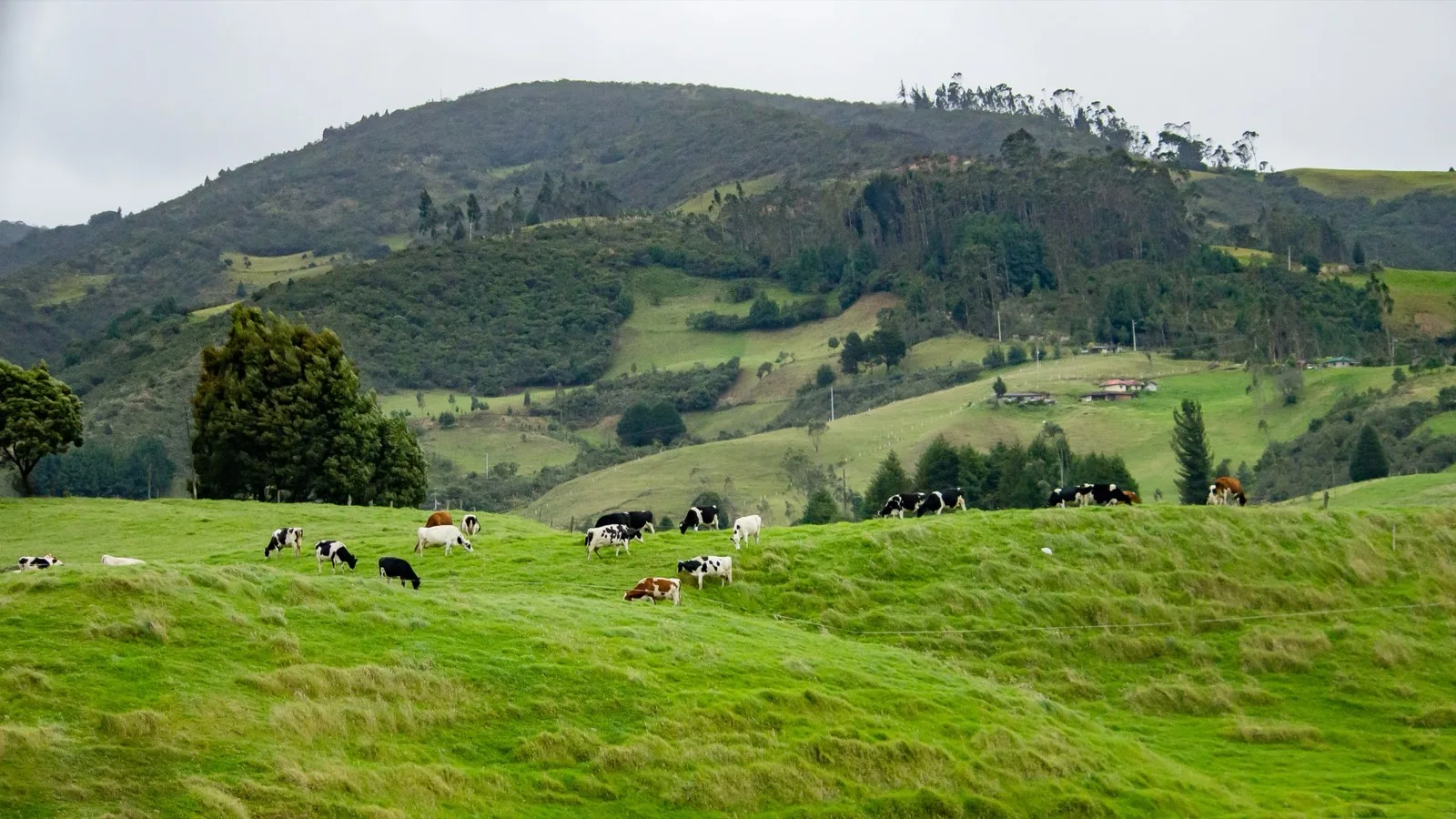
We model the farm for a complete picture.
Insights that drive both sustainability and performance improvements.
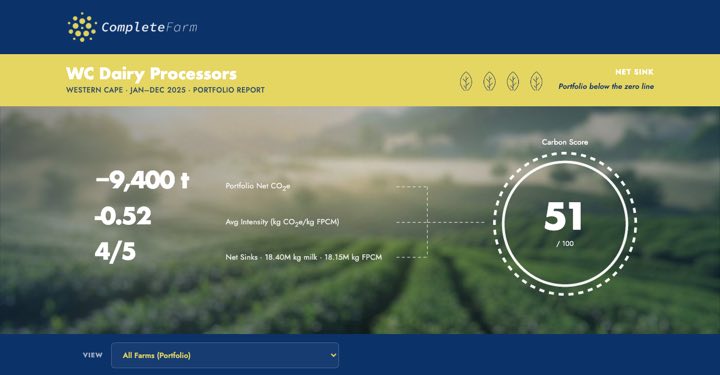
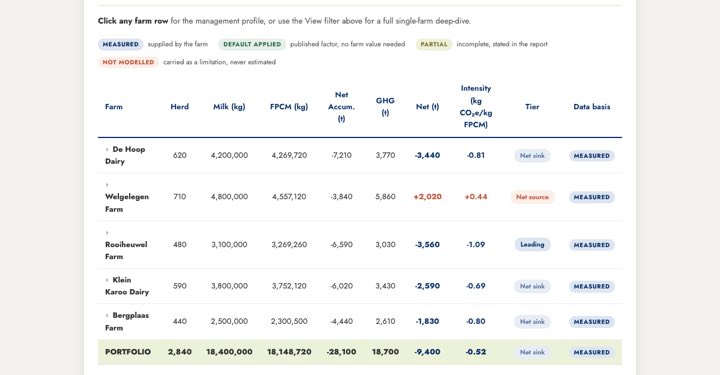
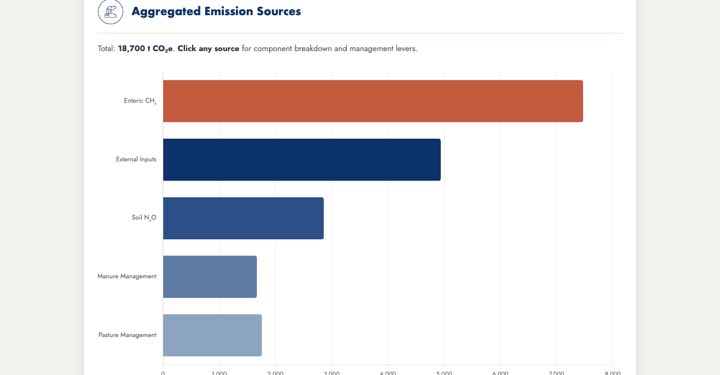
Complete Farm's mAGic model accounts for carbon through the entire farm system and surfaces the specific drivers of a farm's footprint. Processors get supply base reporting with farm-level drill-down, written for disclosure and assurance. Farmers get a report that shows their own business in a new light, with actionable changes that build a more resilient operation. This differentiates us from traditional carbon tools that measure what leaves the farm.

How we drive shared improvement.
Nitrogen leaving as nitrous oxide is nitrogen the farmer paid for. Feed converted poorly is feed bought twice.
Carbon programmes fail when farmers experience them as an audit. Carbon intensity per kilogram of milk is largely a function of how efficiently a system converts feed and fertiliser into milk.
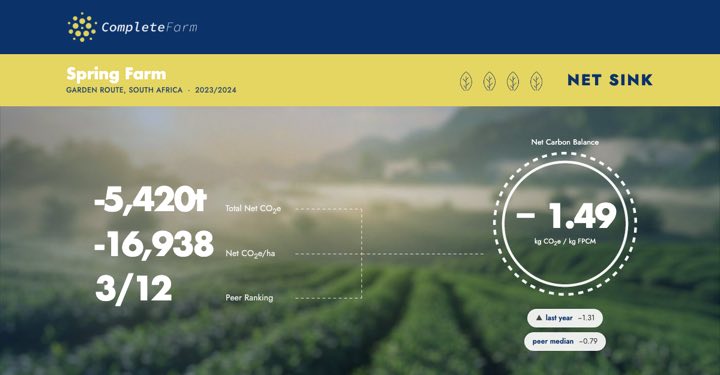
So the farmer report is not a score card. It shows where their carbon sits, how it connects to production efficiency and cost structure, how they compare to anonymised peers, and which changes are worth making.
For the processor
For the farmer
Two principles behind the mAGic model.
Complete Farm is built on mAGic (Managing Agricultural Greenhouse Gas Impacts on Climate), peer-reviewed research from Stellenbosch University, and calibrated to South African pasture-based dairy. It produces a net carbon score per kilogram of fat- and protein-corrected milk (FPCM) and surfaces the drivers behind it.
A complete carbon picture
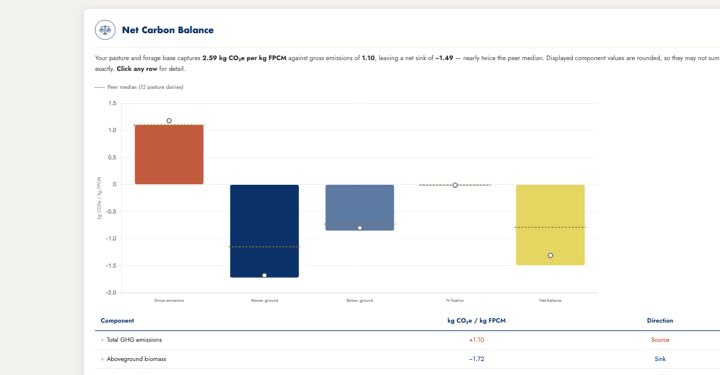
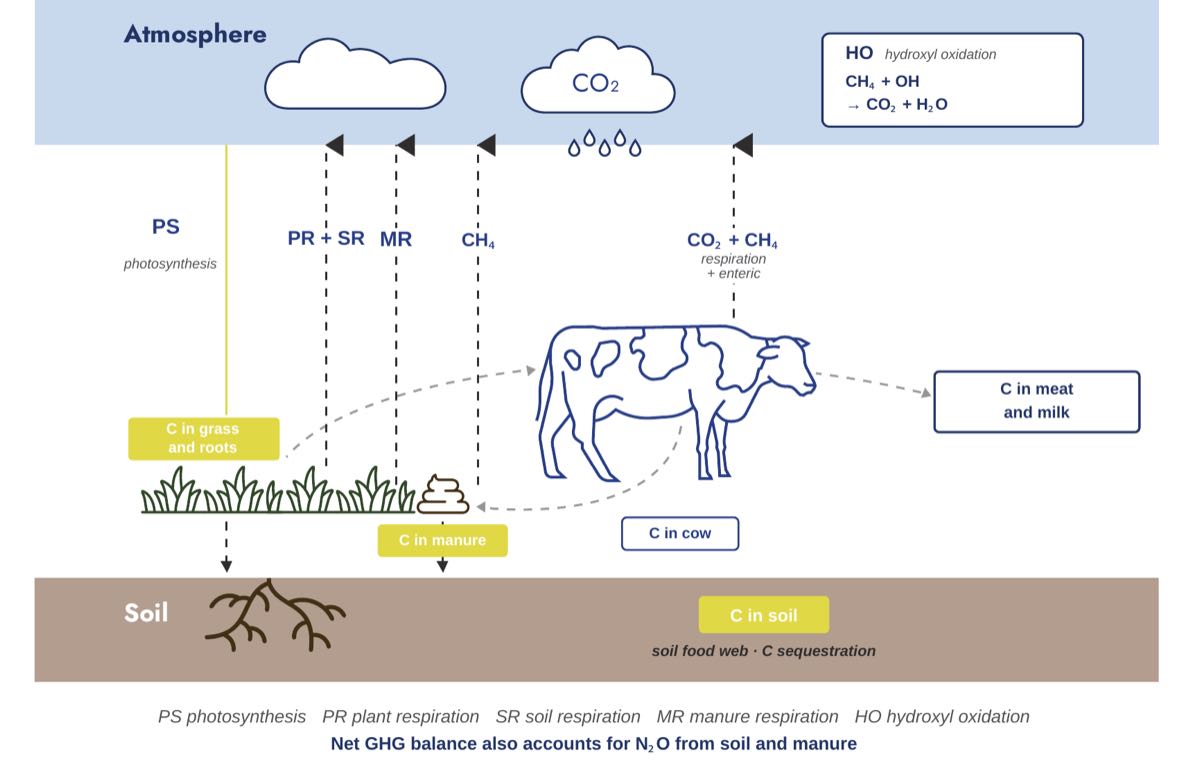
Most tools measure only what leaves the farm. mAGic measures both directions: emissions from cattle, manure and soil, against carbon captured by pastures and stored in soil. Well-managed pasture-based dairy farms are typically net carbon sinks, which gross-emission tools cannot show. Verify 5 · pasture phrasing
Connected system modelling
Carbon, production, finances and resilience are connected on every farm. mAGic models those relationships, so the impact of a management change can be seen across all outcomes, not just the carbon number.
The people behind it.

Riana leads the scientific development of Complete Farm's mAGic model. Her MSc research produced a whole-farm GHG model for South African dairy systems. Her PhD advanced this into a biogenic-carbon, system-dynamics model. That research now underpins Complete Farm and is built to support better farm decisions.

Chris leads the commercial and operational side of Complete Farm. He is a non-executive director of Green H Ranches, a family farming company, and helped guide its transition into intensive dairy production. The combination of firsthand dairy knowledge and strategic consulting and commercial due diligence experience across his career has helped in co-founding Complete Farm.
Start with one conversation.
If you process milk from pasture-based farms in South Africa, or advise farmers who supply them, we would like to hear from you.
Send the form and we will come back to you directly.
Scroll sideways, or pinch to zoom.
Scroll sideways, or pinch to zoom.